
Completing a full Spravato (esketamine) protocol without adequate relief is a discouraging outcome. You followed the process, attended the sessions, and still did not get the response your care team was hoping for. That experience is more common than most patients realize, and it does not mean you are out of options. This article explains …

Completing a full Spravato (esketamine) protocol without adequate relief is a discouraging outcome. You followed the process, attended the sessions, and still did not get the response your care team was hoping for. That experience is more common than most patients realize, and it does not mean you are out of options.
This article explains why some patients do not respond to Spravato, how IV ketamine differs as a treatment even though both are derived from the same compound, and what the evaluation process looks like at Bridgeway in Indianapolis for patients who have already tried esketamine.
Understanding Why Spravato May Not Have Worked
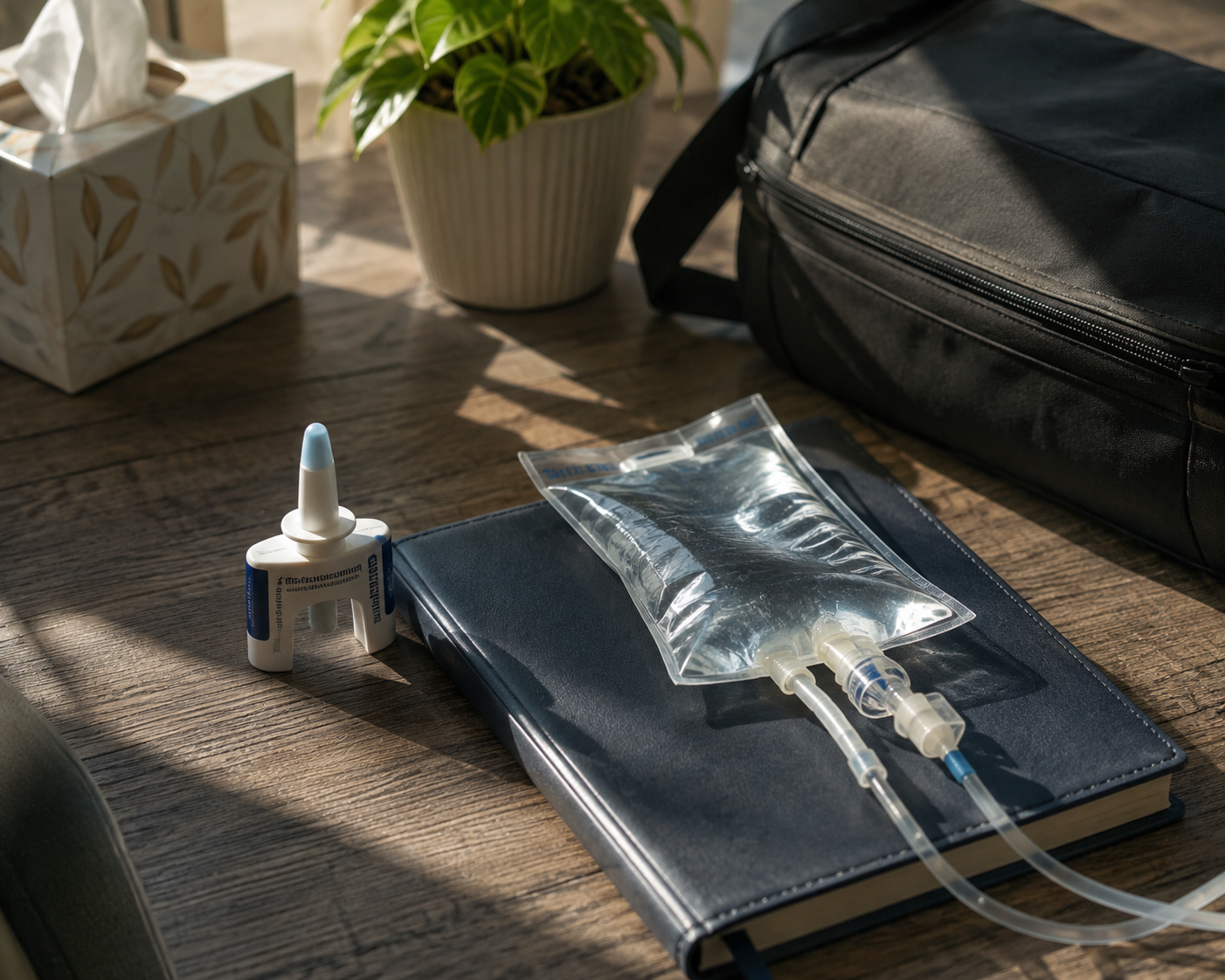
Spravato is an intranasal formulation of esketamine, which is the S-enantiomer of ketamine. It was FDA-approved in 2019 for treatment-resistant depression and has helped a meaningful number of patients. However, clinical response rates vary, and a non-response to Spravato does not indicate a non-response to all ketamine-based treatments.
Several factors can affect Spravato outcomes specifically.
Route of administration and bioavailability. Spravato is administered as a nasal spray, which results in variable absorption depending on nasal anatomy, mucous membrane conditions, and technique. Bioavailability via the intranasal route is estimated at approximately 48 percent, meaning a significant portion of the dose may not reach systemic circulation. IV ketamine, by contrast, achieves 100 percent bioavailability because it is delivered directly into the bloodstream.
Individual neurological variation. The brain’s NMDA receptor density and sensitivity vary between individuals. Some patients show robust responses to esketamine’s S-enantiomer profile but minimal response to racemic ketamine, and vice versa. Non-response to one does not reliably predict non-response to the other.
Concurrent medications reducing efficacy. Benzodiazepines such as Xanax, Klonopin, and Ativan, when taken at higher daily doses, are known to attenuate ketamine’s mechanism of action. Lamictal (lamotrigine) at doses above 150 mg per day can similarly reduce treatment response. If these were part of your medication regimen during Spravato treatment, they may have limited the drug’s effectiveness.
Insufficient session count or interval. The standard Spravato induction involves twice-weekly sessions for four weeks. Patients who discontinued before completing the full course, or who had significant gaps between sessions, may not have reached the therapeutic threshold needed to evaluate true response.
IV Ketamine as a Distinct Clinical Option
IV ketamine and Spravato are related but not identical in their clinical behavior. This distinction matters when evaluating next steps after esketamine non-response.
Racemic IV ketamine contains both R- and S-enantiomers of the compound. Spravato contains only the S-enantiomer. The two enantiomers have different receptor binding profiles and may produce different downstream effects on neuroplasticity and mood regulation. This pharmacological difference is one reason that a subset of patients who do not respond to Spravato do respond to IV ketamine, and why the two treatments are not considered interchangeable in clinical practice.
IV ketamine also allows for more precise dose titration in real time. Because the drug enters circulation directly, the provider can adjust the infusion rate based on the patient’s response during the session. This level of control is not available with an intranasal formulation.
Published case series and clinical observations from ketamine centers across the country indicate that Spravato non-responders represent a meaningful portion of IV ketamine patients, and that a proportion of these individuals do achieve clinical benefit from the intravenous approach. While large-scale head-to-head trials comparing the two modalities in confirmed non-responders are still limited, the mechanistic rationale for trying IV ketamine after Spravato non-response is well established.
Other Factors to Review Before Your Next Treatment
Before pursuing IV ketamine after Spravato non-response, a thorough review of your prior treatment experience is clinically valuable. The following are worth documenting and discussing with your provider.
Your complete Spravato history. How many sessions did you complete? What dose were you receiving? Did you experience any partial relief at any point, or was there no response at all? Partial responders and true non-responders may be approached differently.
Your concurrent medication list at the time of treatment. Any medications that may have blunted esketamine’s effects should be identified. If benzodiazepine use or Lamictal dosing was a factor, optimizing these before starting IV ketamine may improve outcomes.
Co-occurring conditions that may not have been addressed. Treatment-resistant depression frequently co-occurs with chronic pain, anxiety, or PTSD. If those conditions were not part of the treatment focus during your Spravato protocol, addressing them as part of a more comprehensive plan may improve results with IV ketamine.
Realistic expectations for the timeline of response. IV ketamine is not guaranteed to work for patients who did not respond to Spravato. However, the mechanism is different enough to justify a trial, and many patients who had given up on improvement have found meaningful relief through this route.
The Evaluation Process at Bridgeway After Spravato
Bridgeway welcomes patients who have already completed a Spravato protocol without adequate relief. Dr. Sean Cady, a board-certified emergency medicine physician with specialized ketamine training, conducts an initial free consultation that includes a detailed review of your prior treatment history.
During this consultation, Dr. Cady will review your Spravato session record, your current and prior medications, and any other treatments you have received for depression or chronic pain. He will identify any modifiable factors, such as concurrent medications or untreated co-occurring conditions, that may have affected your Spravato response and could be addressed before beginning IV infusions.
If you are a candidate for IV ketamine, the standard induction protocol at Bridgeway involves six infusions over two to three weeks. Each session lasts approximately 45 to 60 minutes. You will be monitored one-on-one by a medical professional throughout the infusion. The dissociative experience is generally mild and resolves within 15 minutes of ending the infusion. You will need a responsible adult to drive you home following each session.
Most patients who proceed to IV ketamine after Spravato non-response are counseled to complete the full six-session induction before assessing response. Individual variation is significant, and some patients who see no benefit from early infusions experience meaningful improvement by the fourth or fifth session.
What to Do Next
A non-response to Spravato is not a definitive answer. The pharmacological distinction between intranasal esketamine and IV racemic ketamine is real, and it creates a legitimate clinical rationale for trying the intravenous approach even after a full esketamine protocol has been completed.
If you have completed Spravato treatment without adequate relief, schedule a free consultation at Bridgeway to discuss whether IV ketamine is an appropriate next step for your specific clinical history. Call 317-450-9541 or request an appointment online at bridgewayindiana.com.
Book a Consultation
It’s easy and free!