
For most patients, the decision to pursue ketamine therapy comes after years of trying other treatments. By the time you reach this point, the last thing you need is more uncertainty. Knowing exactly what will happen, from your first phone call through your final maintenance infusion, makes it easier to commit to the process and …

For most patients, the decision to pursue ketamine therapy comes after years of trying other treatments. By the time you reach this point, the last thing you need is more uncertainty. Knowing exactly what will happen, from your first phone call through your final maintenance infusion, makes it easier to commit to the process and get the most out of it.
This article walks through what to expect from ketamine infusion therapy at Bridgeway in Indianapolis, at every stage of the treatment process.
Before Your First Appointment: The Free Consultation
The process at Bridgeway begins with a free consultation. You do not need a referral from a psychiatrist, though any mental health provider referral is welcomed. During this initial conversation, Dr. Sean Cady reviews your clinical history, current medications, previous treatments, and the specific conditions you are seeking to address.
This consultation serves two purposes. First, it determines whether you are a clinical candidate for ketamine therapy. Second, it gives you the opportunity to ask questions and understand the protocol before committing to treatment. Dr. Cady will discuss realistic expectations for your specific presentation, including how many infusions are typically required before improvement becomes apparent and what the maintenance phase looks like.
Certain medications require discussion before treatment begins. Benzodiazepines such as Klonopin, Xanax, and Ativan at higher daily doses and Lamictal (lamotrigine) above 150 mg per day may attenuate response. If you are taking any of these, Dr. Cady will discuss whether a dosage adjustment is appropriate before your first infusion.
You should also plan to fast for 2 hours prior to your appointment. Arrange for someone to drive you home, as you will not be cleared to drive for the remainder of the day following your infusion.
The Day of Your Infusion: What Happens in the Treatment Room
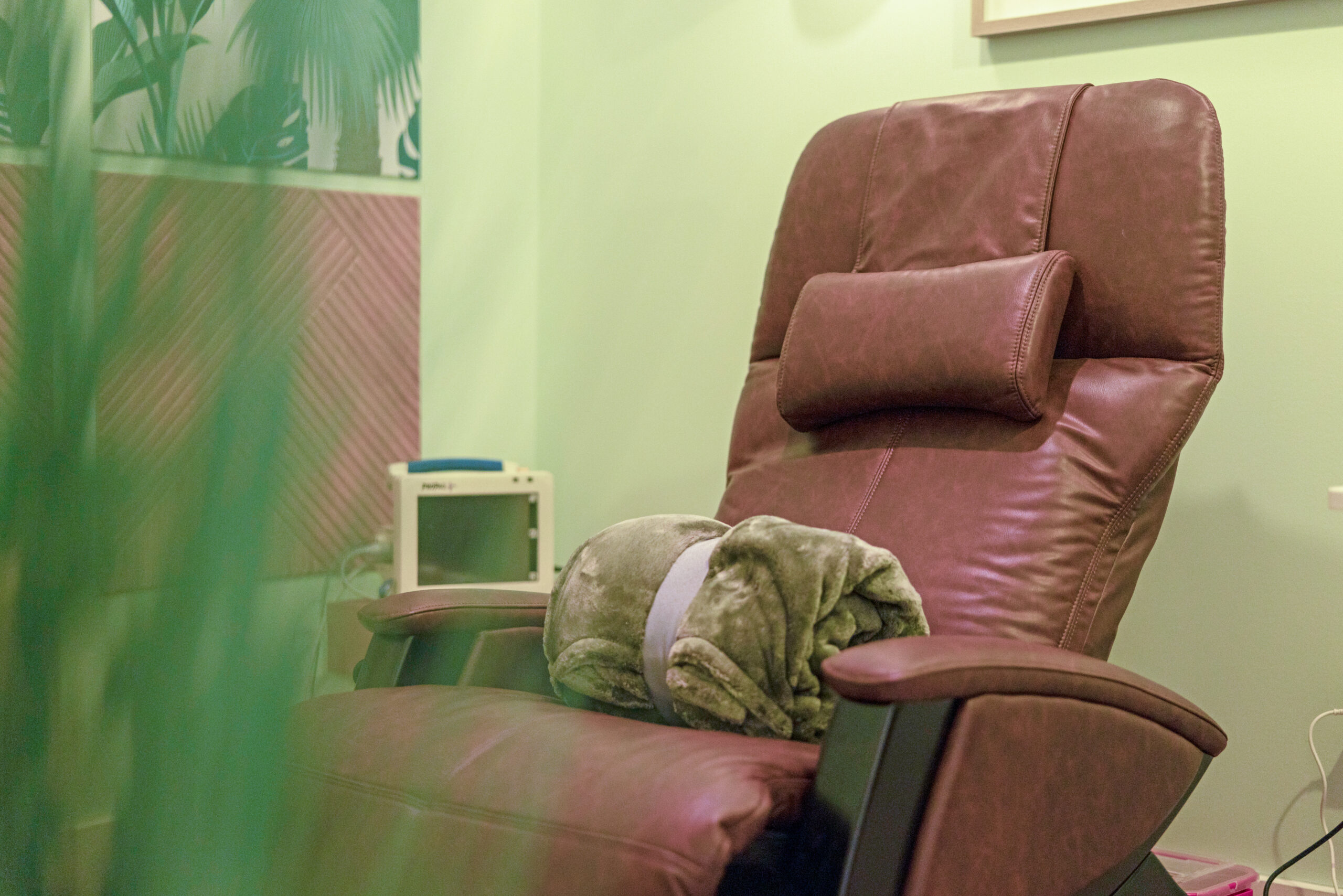
Bridgeway’s clinic is located in the Fountain Square district of Indianapolis. The treatment rooms are private, quiet, and designed to support a calm, controlled experience. You will not be in a shared or open space during your infusion.
When you arrive, a staff member will prepare your IV line. The infusion itself takes approximately 45 to 60 minutes. The dose administered is significantly lower than what is used for surgical anesthesia, which is an important factor for understanding what you will and will not experience.
During the infusion, most patients experience a mild dissociative or introspective state. This is normal and expected. Common descriptions from patients include a sense of mental distance from their usual thought patterns, altered perception of time, sensual changes (scents, colors and sounds), or a feeling of profound deep mental clarity. The experience is generally well tolerated and, for many patients, is described as unexpectedly pleasant and indescribable.
You will be monitored one-on-one by a medical professional throughout the session. Your heart rate and blood pressure will be tracked, as ketamine produces temporary increases in both. If at any point during the infusion you find the experience uncomfortable, the clinical team can adjust the rate or make other modifications to improve your comfort.
Within 15 minutes of ending the infusion, the dissociative experience resolves and your perception returns to normal. There are no delayed flashbacks or prolonged perceptual disturbances. After the infusion, you will spend a short period of time (usually 15 minutes or less) before being cleared for discharge. Appointments usually last between 60 to 75 minutes.
After the Infusion: What to Expect in the Hours That Follow
For the remainder of the day after your infusion, you may feel fatigued. Cognitive clarity may be reduced for several hours. This is expected and temporary.
You should not drive, operate machinery, or make significant decisions for at least 12 hours after your infusion or until you have had a full night of sleep, whichever comes later. Arrange for a responsible adult to take you home from the clinic. Bridgeway does not require someone to accompany you during your session, but having a driver available is strongly recommended. A transportation service may be utilized but needs to be coordinated prior to your appointment.
Most patients feel back to baseline the following morning. Some patients report a noticeable improvement in mood or a reduction in pain symptoms within 24 hours of their first infusion. This rapid-onset response is one of ketamine’s defining clinical characteristics and is distinct from the weeks-long delay associated with oral antidepressants.
The Induction Phase: Your First Six Infusions
The standard induction protocol at Bridgeway involves up to six infusions administered over four weeks. Even if you begin to feel better before completing the entire induction phase, it is clinically important to complete at least 4 infusions over the first four weeks. The first several infusions initiate the neurological changes that produce symptom relief; the later infusions consolidate and extend those changes by supporting the growth of new synaptic connections, a process known as synaptogenesis.
The timeline of response varies by patient. A small percentage of patients notice improvement within 24 hours of the first infusion. Most younger adults experience meaningful improvement after three to four infusions. Patients over 50 may require four to five infusions before improvement becomes apparent. Your experience will be individual, and response timelines should be discussed with Dr. Cady in the context of your specific clinical history.
If the dissociative experience during any session is more intense than you find comfortable, inform the clinical staff. The infusion rate can be reduced or the session can be paused. Most patients adjust to the experience by the second or third infusion and find subsequent sessions easier to tolerate.
The Maintenance Phase: After Induction Is Complete
Following the six-session induction, most patients enter a maintenance phase. Maintenance involves single booster infusions scheduled as needed, on average every 3 weeks, but this is solely based on your symptoms.
The duration of relief between maintenance sessions varies. Some patients require boosters every two weeks; others find that relief extends to two or even three months between sessions. Over time, many patients find that the interval between boosters gradually lengthens, which reflects a cumulative and increasingly durable therapeutic benefit.
Bridgeway does not anticipate that most patients will require ongoing infusions indefinitely. Clinical experience suggests that as patients progress through the maintenance phase, the frequency of boosters decreases for many individuals. That said, the appropriate maintenance schedule is highly individual and will be managed in collaboration with Dr. Cady over time.
Practical Details: Cost, Access, and Scheduling
Ketamine infusion therapy at Bridgeway starts at $200 per individual infusions for mental health indications. . Insurance does not typically cover ketamine infusions, though some plans may provide partial reimbursement as an out-of-network service. Bridgeway provides the necessary documentation for you to submit a reimbursement claim to your insurer.
Flexible Spending Account (FSA) and Health Savings Account (HSA) funds are accepted. Financing is available through CareCredit. U.S. military veterans are encouraged to call directly for information about special fee consideration.
Bridgeway operates by appointment, with new patients typically scheduled five to seven business days in advance. Patients presenting with psychiatric emergencies or active suicidal ideation, particularly those with a referral, may be seen more quickly.
Knowing What to Expect Makes a Difference
The uncertainty surrounding an unfamiliar treatment is one of the most common reasons patients delay seeking care that could genuinely help them. The ketamine infusion process at Bridgeway is medically supervised, clinically structured, and designed to be as comfortable and transparent as possible.
If you are ready to learn whether you are a candidate, or if you simply have more questions before deciding, call Bridgeway at 317-450-9541 or schedule a free consultation at bridgewayindiana.com. The consultation is free, and there is no obligation to proceed.
Book a Consultation
It’s easy and free!